
Introduction
Performance marketing has become one of the most in-demand skills in digital marketing today. Companies no longer want marketing based on assumptions—they want measurable results, ROI, and scalability. That’s why performance marketing interview questions focus heavily on metrics, tools, optimization strategies, and real-world thinking.
This blog covers the Top 20 Performance Marketing Interview Question & Answer, specially curated for freshers, job seekers, digital marketers, and professionals switching to performance roles. Whether you’re preparing for an agency interview or an in-house marketing role, this guide will help you confidently crack your interview.
What Is Performance Marketing?
Performance marketing is a results-driven digital marketing strategy where advertisers pay only when a specific action is completed.
These actions can include:
-
Clicks
-
Leads
-
App installs
-
Purchases
-
Sign-ups
Unlike traditional marketing, performance marketing focuses on data, tracking, and measurable KPIs.
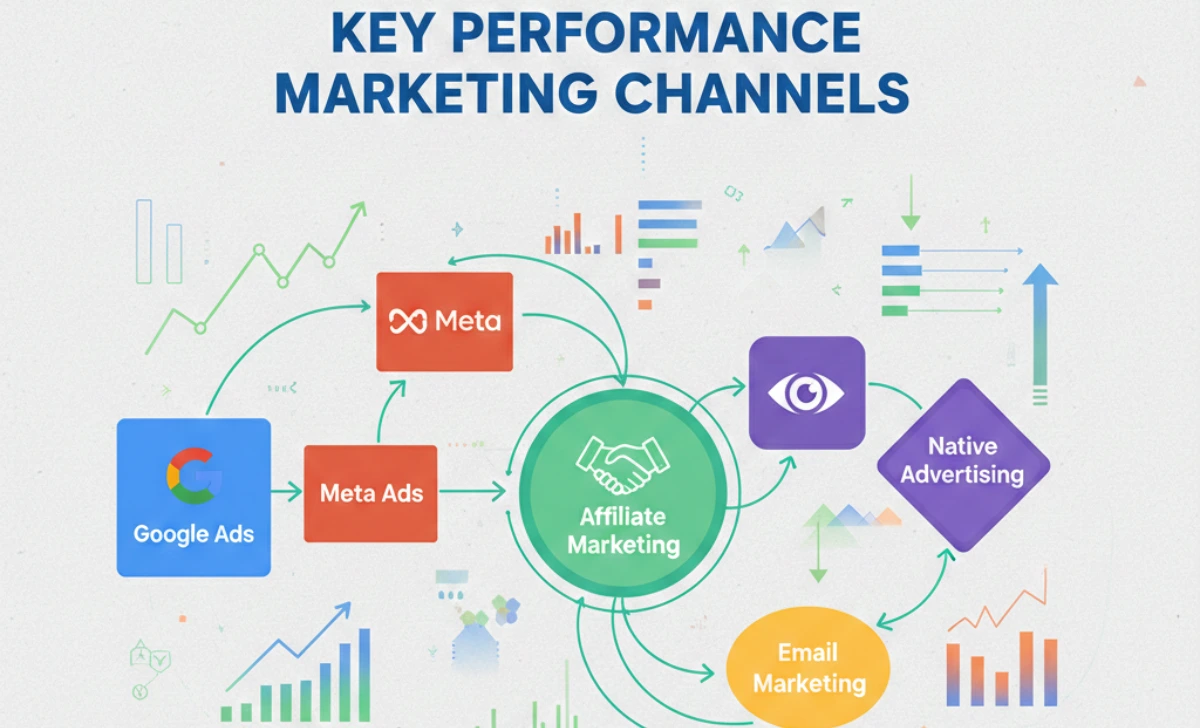
Key Performance Marketing Channels
-
Google Ads (Search, Display, YouTube)
-
Meta Ads (Facebook & Instagram)
-
Affiliate Marketing
-
Native Advertising
-
Email Marketing
Why Performance Marketing Is Important in 2026
With rising ad costs and increasing competition, businesses are prioritizing ROI-focused marketing more than ever.
Key Reasons:
-
100% measurable results
-
Budget optimization based on performance
-
Real-time campaign tracking
-
Better decision-making using data
-
High demand for skilled performance marketers
In 2026, brands prefer marketers who understand numbers, funnels, and optimization, not just creativity.
1. What Is Performance Marketing?
Answer:
Performance marketing is a digital marketing approach where advertisers pay only for specific actions such as clicks, leads, or sales. It focuses on measurable KPIs like CPC, CPA, ROAS, and conversion rate, ensuring better ROI.
2. How Is Performance Marketing Different From Digital Marketing?
Answer:
Digital marketing is a broad term that includes branding, content, SEO, and social media. Performance marketing is a subset of digital marketing focused strictly on results and ROI.
Difference:
-
Digital marketing → Awareness + engagement
-
Performance marketing → Leads + sales + revenue
3. What Are the Key Performance Marketing Channels?
Answer:
Major performance marketing channels include:
-
Google Ads
-
Meta Ads (Facebook & Instagram)
-
Affiliate Marketing
-
Programmatic Advertising
-
Email & SMS Marketing
Each channel is chosen based on the campaign objective and audience behavior.
4. What Are CPC, CPA, and ROAS?
Answer:
-
CPC (Cost Per Click): Cost paid for one click
-
CPA (Cost Per Acquisition): Cost to acquire one customer
-
ROAS (Return on Ad Spend): Revenue generated per ₹1 spent
These metrics help evaluate campaign profitability.
5. What Is ROAS and How Do You Calculate It?
Answer:
ROAS measures how much revenue you earn from ad spend.
Formula:
ROAS = Revenue ÷ Ad Spend
Example:
If you spend ₹10,000 and earn ₹40,000 → ROAS = 4x
6. What Is Conversion Tracking?
Answer:
Conversion tracking allows marketers to track user actions like purchases or form submissions.
Tools Used:
-
Google Tag Manager
-
Google Ads Conversion Tracking
-
Meta Pixel
-
GA4 Events
Without tracking, performance marketing becomes guesswork.
7. What Is a Funnel in Performance Marketing?
Answer:
A funnel represents the customer journey from awareness to conversion.
Stages:
-
TOFU: Awareness
-
MOFU: Consideration
-
BOFU: Conversion
Different creatives and strategies are used at each stage.
8. What Is A/B Testing?
Answer:
A/B testing compares two versions of an ad or landing page to see which performs better.
Common Elements Tested:
-
Headlines
-
Creatives
-
CTA buttons
-
Landing pages
It helps improve CTR and conversion rate.
9. What Is Audience Targeting?
Answer:
Audience targeting helps show ads to the right users.
Types:
-
Interest-based targeting
-
Custom audiences
-
Lookalike audiences
-
Retargeting audiences
Better targeting leads to lower CPA.
10. What Is Retargeting or Remarketing?
Answer:
Retargeting shows ads to users who have already interacted with your website or ads.
Benefits:
-
Higher conversion rate
-
Lower CPA
-
Better ROAS
11. What Is Quality Score in Google Ads?
Answer:
Quality Score determines how relevant your ad is.
Factors:
-
Expected CTR
-
Ad relevance
-
Landing page experience
Higher Quality Score = lower CPC.
12. What Is CTR and Why Is It Important?
Answer:
CTR (Click Through Rate) shows how many users clicked after seeing an ad.
Formula:
CTR = Clicks ÷ Impressions × 100
Higher CTR indicates better ad relevance.
13. What Is Landing Page Optimization?
Answer:
Landing page optimization improves conversion rate.
Key Elements:
-
Fast loading speed
-
Clear headline
-
Strong CTA
-
Trust badges
-
Mobile optimization
14. How Do You Optimize an Ad Campaign?
Answer:
Campaign optimization involves:
-
Analyzing data regularly
-
Pausing low-performing ads
-
Scaling high-performing creatives
-
Improving targeting and bids
15. What Is an Attribution Model?
Answer:
Attribution models decide how credit is assigned to conversions.
Types:
-
First-click
-
Last-click
-
Linear
-
Data-driven
Choosing the right model improves decision-making.
16. What Tools Are Used in Performance Marketing?
Answer:
Common tools include:
-
Google Ads
-
Meta Ads Manager
-
Google Analytics 4
-
Google Tag Manager
-
Hotjar
17. What Is LTV and Why Is It Important?
Answer:
LTV (Lifetime Value) is the total revenue a customer generates over time.
Higher LTV allows marketers to spend more on acquisition while staying profitable.
18. How Do You Reduce CPA?
Answer:
CPA can be reduced by:
-
Improving targeting
-
Better creatives
-
Landing page optimization
-
Retargeting strategies
19. What Are Common Performance Marketing Mistakes?
Answer:
-
No proper tracking
-
Ignoring data
-
Wrong audience targeting
-
Scaling too early
20. How Do You Measure Campaign Success?
Answer:
Success is measured using KPIs like:
-
CPA
-
ROAS
-
Conversion rate
-
Revenue
Metrics should align with business goals.
Performance Marketing Interview Tips
-
Think in numbers, not assumptions
-
Use real campaign examples
-
Know metrics deeply
-
Focus on ROI and scalability
Marketing Stats & Source Links (Performance Marketing Insights)
Performance marketing has become a core growth strategy for businesses because it focuses on measurable results, ROI, and data-driven decision-making. According to HubSpot, companies that use performance-based digital advertising generate up to 2x higher ROI compared to traditional marketing methods, highlighting why performance marketing interview questions heavily focus on metrics like CPA, ROAS, and CTR
(Source: https://www.hubspot.com/marketing-statistics).
A report by Statista shows that global digital advertising spend is expected to cross $1 trillion, with performance marketing channels such as paid search and social ads contributing the largest share. This growth explains the rising demand for skilled performance marketers in agencies and in-house teams
(Source: https://www.statista.com/topics/1164/online-advertising/).
According to Google Ads Help Center, advertisers using conversion tracking and optimization strategies experience 30–40% better campaign performance, making tracking knowledge a critical skill evaluated in every performance marketing interview
(Source: https://support.google.com/google-ads).
Data from Meta Business reveals that campaigns using advanced audience targeting and retargeting strategies achieve higher conversion rates and lower CPA, which is why interviewers frequently ask questions around audience segmentation and remarketing
(Source: https://www.facebook.com/business/help).
These marketing stats clearly show why Performance Marketing Interview Question topics focus on analytics, tools, optimization techniques, and ROI-based thinking in 2026.
Conclusion
Performance marketing is no longer optional—it’s a core business growth strategy. Preparing for performance marketing interviews requires a strong understanding of metrics, tools, funnels, and optimization techniques. By mastering these top 20 interview questions, you’ll be well-equipped to stand out and crack your next interview with confidence.