Introduction
In today’s hyper-connected world, digital marketing isn’t just an optional skill — it’s a business imperative. From small local shops to global enterprises, organizations are increasingly relying on digital marketing strategies like SEO, social media advertising, email marketing, and analytics to grow their brands and drive revenue.
“Learning digital marketing today means future-proofing your business and your career.”
“The best investment you can make is in your own skills.”
With the growing demand, aspiring learners often face a big question: Should I choose an offline course or online course in digital marketing?
In this blog, we’ll explore this question in depth — looking at key industry trends, pros and cons, and helping you make the right choice for your goals.
Market Context & Statistics
The digital marketing industry is growing at an unprecedented pace — and so is the demand for skilled professionals. Globally, the digital marketing and advertising market is expected to reach approximately $786.2 billion by 2026, driven by increased online advertising spend and widespread adoption of digital channels.
Source:https://www.adwenplus.com/digital-marketing-career-scope-and-job-stats-you-should-know/
In India, digital marketing is also booming. The Indian digital advertising market is projected to grow to around ₹69,856 crore by 2026, accounting for a rapidly increasing share of total ad spend as businesses pivot online.
Source:https://www.financialexpress.com/business/brandwagon-indian-digital-ad-market-set-to-reach-rs-59200-crore-by-2025-end-dentsu-3737045/
Employment demand in this field is robust as well — in 2024, India alone saw the creation of around 900,000 digital marketing jobs, reflecting strong industry demand across sectors.
Source: https://iide.co/blog/scope-of-digital-marketing/
These trends highlight why learning digital marketing skills is increasingly essential — not just for job seekers, but also for business owners who want to grow their brands online.
Purpose of a Digital Marketing Course
Whether you’re a business owner, entrepreneur, or career aspirant, a digital marketing course serves multiple purposes:
- Skill Development: Learn practical tactics like SEO, PPC, content marketing, social media strategy, email marketing, analytics, and more.
- Business Growth: Apply digital tools and strategies to attract targeted leads, improve conversions, and boost revenue.
- Certification: Many courses provide certificates that enhance your professional profile.
- Confidence & Credibility: Gain confidence to plan and execute marketing strategies independently.
- Placement Assistance: Some programs offer job support, internships, and real-world projects.
A high-quality course equips learners with both theory and hands-on experience, helping them deliver measurable results in real business scenarios.
Offline Course vs Online Course In Digital Marketing: A Clear Comparison
Online and offline digital marketing courses both aim to equip learners with essential skills, but the learning experience differs significantly. Online courses focus on flexibility and accessibility. They allow learners to study from anywhere, often at their own pace, making them ideal for working professionals or business owners with time constraints. These courses typically rely on recorded videos, live webinars, downloadable resources, and discussion forums. However, the lack of direct face-to-face interaction may reduce engagement, and learners often need strong self-discipline to stay consistent.
In contrast, offline digital marketing courses offer a more structured and immersive learning environment. Classroom-based training enables real-time interaction with instructors, instant doubt-clearing, and practical exposure through hands-on assignments. Offline courses often include live projects, group activities, and networking opportunities that closely simulate real-world work environments. While they require physical attendance and usually involve higher costs, they often deliver stronger accountability, deeper understanding, and better career support.
Ultimately, the choice depends on individual learning preferences, goals, and commitment levels. Online courses suit independent learners who value flexibility, while offline courses are often more effective for those seeking guided learning, practical experience, and faster professional growth.
Both have distinct strengths — and choosing the right one depends on factors like learning style, schedule, goals, and budget.
Offline Digital Marketing Courses
| Pros | Cons |
| Face-to-face interaction with instructors | Generally higher fees compared to online options |
| Structured schedule keeps learners accountable | Requires physical attendance and commuting |
| Networking opportunities with peers | Less flexibility for working professionals |
| Immediate feedback and personalized guidance | Limited access to course recordings |
| Better hands-on training with live projects | May require relocation for some learners |
Table: Pros and Cons of Offline Digital Marketing Courses
Online Digital Marketing Courses
| Pros | Cons |
| Flexible learning schedule | Less direct instructor interaction |
| Lower overall cost | Requires self-discipline |
| Accessible from anywhere | May lack hands-on practical environment |
| Wide variety of course options | Networking opportunities can be limited |
| Ability to revisit recordings | Some courses lack placement support |
Table: Pros and Cons of Online Digital Marketing Courses
Benefits Of Offline and Online Courses
Offline Courses
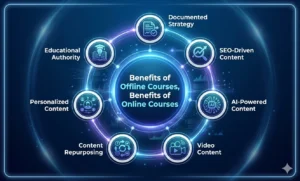
Offline courses offer an immersive learning environment that many students and professionals still prefer. Being physically present in a classroom fosters real-time interaction, immediate doubt-clearing, and strong networking opportunities with trainers and classmates. This type of learning is particularly effective for those who benefit from structure and discipline. Instructors can provide personalized guidance, hands-on project walkthroughs, and live examples that help solidify concepts more quickly than self-paced learning.Additionally, many good offline programs include placement support, internships, and alumni networks — which can be a significant advantage when launching a career in digital marketing.
Online Courses
Online courses are highly flexible and accessible, allowing learners to study from anywhere at their own pace. This makes them especially suitable for working professionals and learners with busy schedules. With lower tuition fees and no commuting costs, online learning is often more affordable and convenient. Many online programs also offer virtual communities, discussion forums, and networking events, helping learners connect with peers and industry experts. Additionally, top online courses often include certifications that are industry-recognized.
Why Offline Courses Have an Edge
While both online and offline courses have their merits, offline digital marketing courses often deliver stronger results for serious learners — especially those who are new to the field or aiming for a career transition.
Here’s why:
- Enhanced Engagement: Live classrooms force a learning rhythm and accountability that many online formats struggle to achieve.
- Practical Training: Offline courses often incorporate real projects and hands-on assignments with expert guidance that builds confidence and portfolio pieces.
- Stronger Networking: Meeting instructors and peers face-to-face creates deeper connections and long-lasting professional relationships.
- Better Placement Support: Many offline institutes help with interviews, resume building, mock tests, and ongoing mentorship — advantages that online programs often lack.
For learners who want structured progression, personalized feedback, and career acceleration, offline training frequently delivers better real-world preparation.
Why Choose Next Tech Marketer
If you’re ready to take your digital marketing skills to the next level, Next Tech Marketer offers a comprehensive, industry-aligned training experience that blends practical learning with professional growth opportunities.
Here’s what sets Next Tech Marketer apart:
Industry-Expert Trainers: Learn from professionals with real experience in managing and executing successful digital marketing campaigns.
Practical Projects: Work on live projects that reflect real business challenges and market scenarios.
Small Batch Sizes: Get personalized attention, one-to-one mentorship, and focused guidance throughout your learning journey.
Placement Support: Dedicated career assistance to help you secure your first job, internship, or freelance client.
Testimonials & Success Stories: Hundreds of learners have built successful careers and businesses through our training programs.
Whether you’re aiming for job growth, freelancing success, or business expansion, Next Tech Marketer equips you with the right skills, practical exposure, and confidence to succeed in the digital world.
Conclusion
Choosing between online and offline digital marketing courses isn’t easy. Online courses offer flexibility and affordability, while offline courses provide structure, interaction, and deeper learning.
However, if your goal is rapid skill mastery, real-world application, and career acceleration, offline digital marketing training often delivers better results — offering you practical experience, stronger networks, and personalized guidance that help you stand out in a competitive market.
Invest in the right kind of learning — because your skills will shape your success.
5 FAQs
- Are online digital marketing courses less effective than offline ones?
Not necessarily — online courses can be very effective, especially for self-motivated learners. However, offline courses have an edge in terms of interaction and hands-on experience. - Can a beginner start with an online course?
Yes — beginners can start online, but may benefit more from structured offline guidance as they build confidence. - Do offline courses include placement support?
Many offline programs include placement assistance, internships, and career guidance, which can be valuable for job seekers. - Which format is more affordable?
Generally, online courses are more affordable due to lower overhead costs and no commuting expenses. - Can I switch between online and offline learning?
Absolutely — many learners start online and later join offline programs for deeper engagement and support.
Also Read
- https://nexttechmarketers.com/blog/top-benefits-of-digital-marketing-every-business-owner-should-know/
- https://nexttechmarketers.com/blog/digital-marketing-salary/